
Fintech
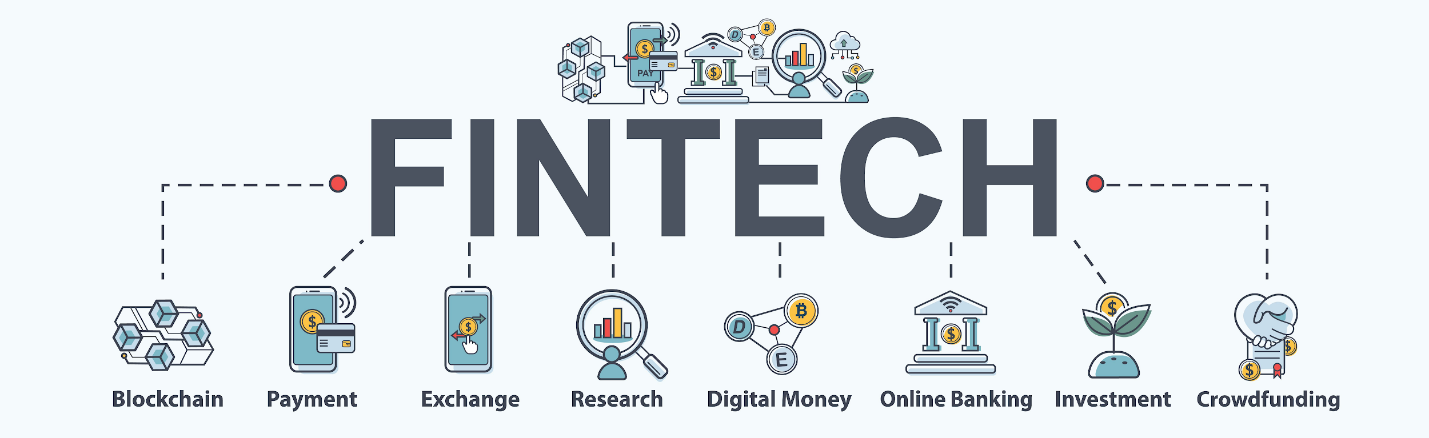
The term “Fintech” refers to emerging technology that aims to enhance and simplify financial services distribution and use. Fintech, at the most basic level, is used to help businesses, business owners, and customers better control their economic activities, processes, and lives through the use of advanced software and algorithms that run on computers and, increasingly, smartphones. Money transactions, depositing a check using your computer, bypassing a bank branch to apply for loans, collecting money for a business startup, or handling your savings are all examples of Fintech.
Islamic Fintech
Islamic financial technology is one of the innovations in Islamic finance that has been aided by technological and internet advances (Fintech). Islamic Fintech differs from traditional Fintech in that it is open, mutually advantageous, and sharia-compliant. According to one report, the existence of Islamic Fintech firms may be beneficial to startups. It would be a significant boost for young graduates, and a few organizations provide sharia-compliant funding to young graduate aspirants. Islamic Fintech is built on Sharia’s ethos and values, and it has the potential to lead the finance world around the world. Islamic Fintech’s most important benefit is that it is straightforward, affordable, and simple to use. Islamic FinTech gives Islamic banks the ability to improve the financial landscape by establishing themselves as a more transparent and ethical alternative to traditional finance.
The shortage of skilled human resources and consistent government policy has been the most significant impediment to Islamic FinTech. Researchers further state that to develop a good ecosystem for Islamic FinTech in the country, the government must bring proper regulation. The opportunities for Islamic finance are more than the conventional finance because the basic concept of FinTech-shared capital is following the rules prescribed by the sharia. Islamic FinTech has the same values and ethics, which are the basics of Islamic Finance.
Islamic Fintech Opportunities and Challenges
Islamic Fintech can assist emerging businesses by offering a variety of innovative products and services. It has the potential to provide a cost-effective alternative to financial advantages. It would provide a lifeline for conventional Islamic banks, allowing them to go digital and offer low-cost financial services. Islamic Fintech is open, affordable, and simple to use, and it can easily win consumer confidence. It will quickly earn the trust of Muslim investors because it adheres to sharia’s laws.
The shortage of excellent and authentic analysis in the Islamic Fintech field is one of the problems. Islamic FinTech must keep up with the fast-paced evolution of conventional banking. Islamic FinTech must ensure continuity and safeguard customers and institutions against unethical trading activities. As technology improves accountability, banks are exposed at any level. Since Islamic FinTech is still relatively young, investors are unsure how much money is worthwhile.
Conventional Fintech Opportunities and Challenges
FinTech is also a marketing term for products and services that are more user-friendly, reliable, transparent, and computerized than they are now. More than 83% of financial intuitions conclude that fintech startups would cause challenges or risks in their businesses.
One of the most significant prospects to emerge from the present scenario, in which the bulk of the workforce works from home, increases mobile app payments. As a result of this trend, major payment fintech applications are seeing a significant rise in use. Fintech firms also store vast amounts of highly confidential customer data, such as credit card numbers, income and investment records, social security numbers, and so on. Because of the increased use of phones and online banking systems, this information is still in transit and, as a result, susceptible. As a result, fintechs’ device protection and data privacy are becoming increasingly relevant. According to ImmuniWeb, almost every fintech company had significant data protection, enforcement, or other security problems related to API security and web application security even before the COVID-19 crisis. Cross-site scripting (XSS), device misconfiguration, and confidential data leakage are also reasonably well-known vulnerabilities that can be mitigated.
FinTech firms are particularly vulnerable to regulatory standards, compliances, and legal responsibilities because of the discreet services. About 64% of fintech are still breaking the General Data Protection Regulation’s rules. Fintechs have been forced to reconsider their sales and spending models and adjust or increase their finances due to the recent economic recession and harsh interest rate cuts. Many businesses are implementing cost-cutting plans such as staff reductions and wage cuts to cope with the economic downturn.
Summary
Islamic Fintech is defined similarly to conventional Fintech, except Shariah rules must be strictly observed in Islamic Fintech. The branch of Islamic law that deals with economic dealings, in particular, must be practiced. Fintech is not considered Islamic or Halal if there is any firm indication that any activities are conducted in Shariah law violation. It is important to note that there are no grey areas for Halal status; transactions are either halal (permissible) or haram (prohibited).
Also, the Islamic banking and finance (IBF) sector surpassed 100 million customers worldwide. The future demand is far greater than that, given the growing number of Muslims worldwide (nearly 2 billion people). Islamic Fintech has the potential to expand Islamic Finance’s market share.